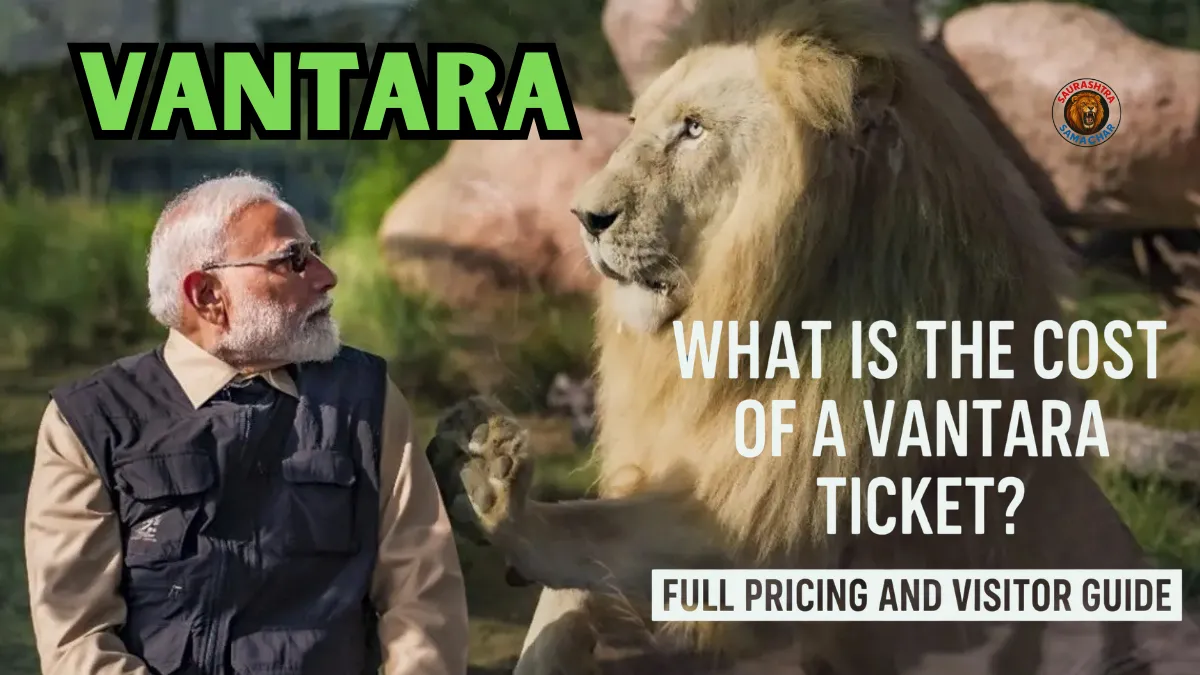
Is Vantara a private zoo? This is one of the most common questions people ask after hearing about Vantara, the massive animal rescue, care, and rehabilitation initiative launched in Gujarat, India. With its grand scale, state-of-the-art facilities, and private management by the Reliance Foundation, many assume it must be a private zoo. But the reality is far more nuanced.
This article explores what Vantara truly is, how it works, why it’s not a private zoo in the conventional sense, and what makes it a unique conservation model in the world.
What is Vantara?
Vantara, meaning “Star of the Forest” in Sanskrit, is one of the world’s largest and most advanced animal welfare projects. Built on over 3,000+ acres in Jamnagar, Gujarat, it is led by Anant Ambani and managed by the Reliance Industries Foundation.
The facility houses thousands of rescued animals, including elephants, lions, tigers, leopards, crocodiles, exotic birds, and several endangered species. Vantara’s primary mission is not entertainment, but rescue, treatment, rehabilitation, and long-term conservation.
Unlike government-run zoos that function under the Central Zoo Authority (CZA) for public visitation, Vantara is designed as a non-commercial conservation hub.
Is Vantara a Private Zoo?
The straightforward answer is: No, Vantara is not a private zoo.
Even though it is privately funded and managed, it does not operate like private zoos, which typically buy animals for display and entertainment. Instead, Vantara works on a philanthropic, non-profit model focused on:
- Rescuing animals from illegal captivity, circuses, and human-wildlife conflict.
- Providing veterinary care and rehabilitation.
- Conserving endangered species through ethical breeding programs.
- Supporting global research and awareness on wildlife welfare.
So while Vantara is privately managed, its mission is humanitarian and ecological, not commercial.
How Vantara Differs from a Private Zoo
To clear the confusion, here’s a detailed comparison:
| Feature | Typical Private Zoo | Vantara |
|---|---|---|
| Ownership | Privately owned, often for profit | Privately managed, non-profit (Reliance Foundation) |
| Primary Goal | Entertainment and tourism | Rescue, rehabilitation, and conservation |
| Animal Source | Purchased or bred for display | Rescued from abuse, illegal captivity, or conflict zones |
| Public Access | Open to visitors daily with tickets | Restricted access; controlled visits only |
| Animal Living Space | Limited enclosures | Expansive natural habitats |
| Focus | Generating revenue | Animal healthcare, welfare, and global conservation |
From this table, it’s clear that calling Vantara a “private zoo” would be misleading.
Why People Think Vantara is a Private Zoo
Despite its conservation-first model, many still ask, “Is Vantara a private zoo?” for a few reasons:
- Private Ownership – Since it is not run by the government but by Reliance, the “private” label is often assumed.
- Large-Scale Animal Collection – Housing thousands of animals gives it the appearance of a massive zoo.
- Restricted Entry – Unlike government zoos, the public cannot freely walk in, which makes it feel “exclusive.”
However, these factors do not define it as a zoo. Its mission-driven approach makes it fundamentally different.
The Vision Behind Vantara
The creation of Vantara stems from Anant Ambani’s lifelong passion for animal welfare. The vision is not to entertain people but to set a global standard in how humans protect wildlife.
Key Objectives of Vantara:
- Build one of the world’s largest rescue centers.
- Operate Asia’s most advanced veterinary hospital for wild and exotic species.
- Run breeding programs for critically endangered species like Asiatic lions and elephants.
- Provide lifelong sanctuary to rescued animals who cannot return to the wild.
- Create international collaborations for research, training, and conservation.
Facilities at Vantara
Unlike conventional zoos, Vantara has specialized infrastructure designed for animal recovery and comfort:
- Animal Rescue and Rehabilitation Center – Focused on animals rescued from poor conditions.
- World-Class Veterinary Hospital – Equipped with MRI, CT scans, endoscopy, pathology labs, and dedicated ICU units.
- Natural Habitats – Instead of cages, animals live in large, open spaces that mimic the wild.
- Elephant Rescue Centre – Home to more than 200 elephants rescued from captivity and abuse.
- Research and Training Facilities – Collaboration with international experts for improving animal care standards.
Global Significance of Vantara
While India has many zoos and sanctuaries, Vantara is unique on a global scale because:
- It is among the largest privately funded conservation projects in the world.
- It combines rescue, treatment, sanctuary, and research in one place.
- It has international partnerships with leading wildlife experts.
- It prioritizes animal dignity over tourism, setting a new model for others.
In fact, experts believe Vantara could become a global hub for animal welfare innovation, much like how Kenya is known for wild safaris and Africa for lion conservation.
Public Access: Can You Visit Vantara?
At present, Vantara is not a regular tourist destination. Public entry is restricted to protect the animals from stress and human interference. Access is generally allowed only through:
- Special permissions, collaborations, or educational visits.
- Future awareness programs or guided tours (if introduced later).
This makes it very different from zoos, where the main purpose is to attract daily visitors.
Challenges and Criticism
No large-scale project is without challenges. Some common criticisms raised include:
- Accessibility – Since it’s not open to the public, people feel left out.
- Private Management – Some worry that private ownership may limit transparency.
- Scale of Maintenance – Managing thousands of animals requires huge resources and long-term commitment.
However, the Reliance Foundation has assured long-term sustainability of the project with consistent investment and global partnerships.
Also read: Vantara to Develop Elephant Rehabilitation Facility at Nandani
The Future of Vantara
Looking ahead, Vantara plans to expand its impact by:
- Creating a global network of animal rescue partnerships.
- Launching education programs for schools and universities.
- Potentially opening controlled, educational tours for the public.
- Becoming a world leader in veterinary innovation for exotic and wild species.
If successful, it could redefine animal conservation in India and globally.
Also read: Vantara Animal Rescue Team: Giving Hope and Healing to Wildlife in India
Conclusion
So, is Vantara a private zoo? The answer is no.
While it is privately managed, Vantara does not function like a private zoo whose purpose is entertainment and profit. Instead, it is a non-commercial, philanthropic conservation initiative dedicated to animal welfare, rescue, rehabilitation, and research.
In short:
- Not a zoo → because it doesn’t exist for display and ticket sales.
- Not just private → because its mission is global conservation, not exclusivity.
- Truly unique → because it sets a new benchmark for how humans can care for animals.
Vantara is not about putting animals on show. It is about giving them a second chance at life.