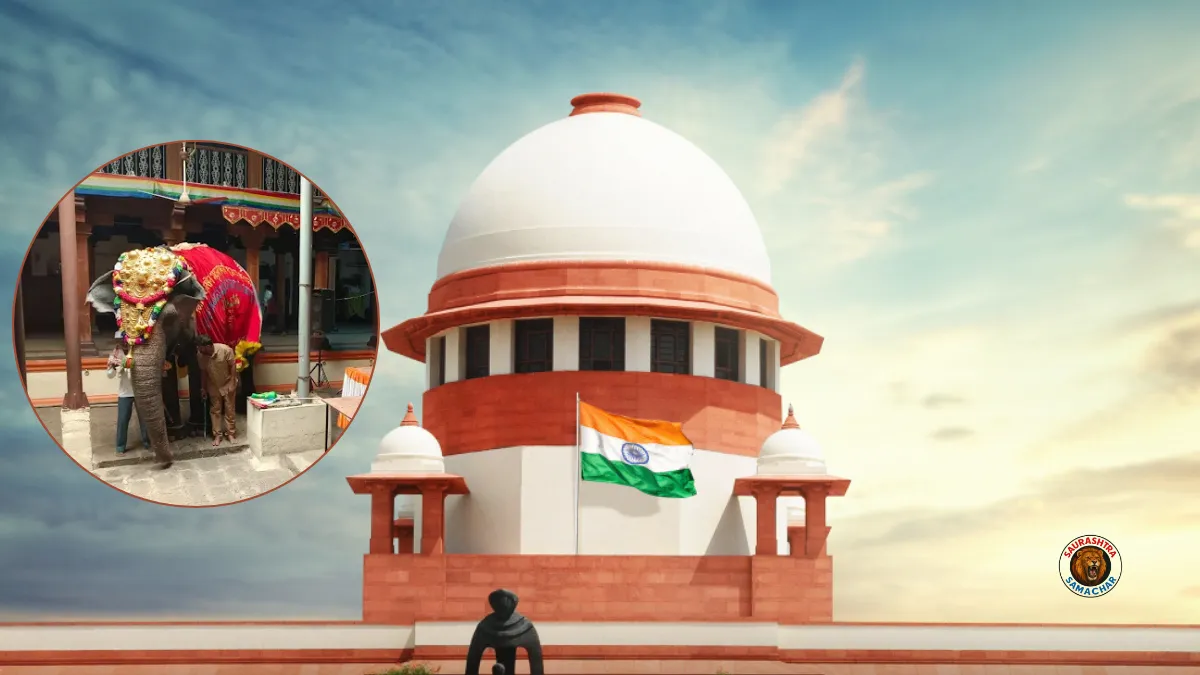
Vantara-Elephant Mahadevi has once again become a focal point of legal attention in India’s highest court. On Thursday, August 14, 2025, the Supreme Court sharply criticised a petition that sought the return of captive elephants from Gujarat’s Vantara Wildlife Rescue and Rehabilitation Centre, describing the plea as “completely vague”. The court has now directed the petitioner to include Vantara as a formal party to the case before it proceeds further.
What Is Vantara?
Vantara, located in Jamnagar, Gujarat, is a large-scale wildlife rescue, rehabilitation, and care facility that has, over recent years, rescued hundreds of wild animals, including elephants, lions, and exotic birds. While the centre promotes itself as a sanctuary dedicated to animal welfare, it has faced repeated scrutiny from activists and some wildlife organisations, who have raised concerns about the origins of the animals housed there.
The Petition: Key Allegations
The petition was filed by advocate C.R. Jaya Sukin, who appeared in person before the court. Sukin requested the constitution of a monitoring committee that would oversee the process of returning captive elephants at Vantara to their “rightful owners.”
The plea also sought a broader directive to rescue all wild animals and birds from Vantara and release them into their natural habitats.
According to Sukin, the issue is not limited to elephants alone. The petition alleged multiple violations of Indian wildlife protection laws, claiming that:
- Several captive elephants had been forcibly taken from temples and private owners across different states.
- Vantara housed endangered species brought from both within India and abroad.
- These animals were allegedly brought in under the pretext of rescue and rehabilitation.
- Certain state officials were compromised or threatened to facilitate the transfers.
Supreme Court’s Response
A bench of Justices Pankaj Mithal and P.B. Varale expressed concern over the manner in which the petition was presented. The judges noted that serious allegations were made against Vantara, yet the organisation itself had not been named as a party in the case.
“You are making allegations against parties which are not represented here. You have not made them respondents. You implead them and then come back to us; we will see,”-Supreme Court Bench to Petitioner
The court directed Sukin to add Vantara as a respondent so that the organisation could respond to the allegations. Only then, the bench said, would the court consider the claims in detail.
The next hearing is scheduled for August 25, 2025.
Case Details at a Glance
| Case Title | Petitioner | Respondents | Case Numbers | Next Hearing Date |
|---|---|---|---|---|
| C.R. Jaya Sukin v. Union of India & Ors. | Advocate C.R. Jaya Sukin | Union of India, Others, and (to be added) Vantara | W.P.(C) No. 783/2025 | August 25, 2025 |
| Dev Sharma v. Union of India (Tagged with Sukin’s case) | Dev Sharma | Union of India | W.P.(C) No. 779/2025 | August 25, 2025 |
Link with Elephant Mahadevi Controversy
While Sukin’s petition focuses broadly on captive elephants, the issue intersects with the ongoing Elephant Mahadevi matter. Mahadevi is a temple elephant from Kolhapur, Maharashtra, whose transfer to Gujarat reportedly sparked protests and legal petitions earlier this year.
Activists have argued that the removal of temple elephants violates cultural, religious, and animal rights considerations. Supporters of the transfer, however, have claimed that elephants like Mahadevi are better cared for in facilities such as Vantara, where they can receive proper veterinary attention and live in more natural conditions than in urban temple settings.
Both matters-Sukin’s plea and the Elephant Mahadevi petition — are now drawing attention from conservationists, religious leaders, and legal experts.
What the Petitioner Wants
Sukin’s demands, as outlined in the petition, are extensive:
- Creation of a Monitoring Committee
- To ensure that captive elephants at Vantara are returned to their original owners.
- Rescue of All Animals and Birds
- Including exotic and endangered species.
- To be released into the wild rather than kept in captivity.
- Investigation into Alleged Violations
- Examination of possible illegal wildlife transfers.
- Scrutiny of the role of state and central wildlife authorities.
- Accountability for Officials
- Action against those who may have been compromised or threatened.
Concerns Raised by Wildlife Activists
Wildlife protection groups have mixed views on the petition. Some agree that legal transparency is needed in the handling of rescued animals, while others warn that an immediate release of captive animals into the wild can be dangerous.
Key Concerns Include:
- Adaptation to the Wild: Captive elephants, especially those who have lived in temples or human-dominated areas, may not survive if abruptly released.
- Legal Compliance: Any movement of animals across states must comply with the Wildlife Protection Act, 1972, and CITES (Convention on International Trade in Endangered Species).
- Role of Rehabilitation Centres: Many argue that facilities like Vantara are necessary to care for animals that cannot be returned to the wild due to health or behavioural issues.
Vantara’s Position (So Far)
As of now, Vantara has not publicly responded to Sukin’s allegations in court, since it has not yet been made a party to the case. In previous statements, however, the facility has maintained that:
- All rescues are carried out legally and in coordination with state forest departments.
- Animals brought to Vantara receive medical treatment, nutritious food, and safe enclosures.
- The aim is rehabilitation and long-term care, not exploitation.
Broader Legal Context
The Supreme Court of India has in recent years been called upon multiple times to decide on matters involving the welfare of elephants, particularly those used in religious or tourism contexts. Previous rulings have stressed the importance of upholding wildlife protection laws while balancing cultural traditions.
In this case, the court is expected to:
- Examine the validity of the transfers of elephants and other animals to Vantara.
- Determine whether state and central authorities acted within the law.
- Assess if the petitioner’s demands are feasible and in the best interest of animal welfare.
Timeline of Events
| Date | Event |
|---|---|
| Earlier in 2025 | Reports surface of elephants, including Elephant Mahadevi, being moved from temples to Vantara. |
| August 2025 (Early) | Petitions filed in the Supreme Court against these transfers. |
| August 14, 2025 | Supreme Court labels Sukin’s petition “completely vague” and directs addition of Vantara as a party. |
| August 25, 2025 | Scheduled date for next hearing. |
What Happens Next?
On August 25, the petitioner must present a revised plea with Vantara officially named as a respondent. Only then will the court:
- Hear arguments from both sides.
- Decide whether to form a monitoring committee.
- Possibly order an investigation into alleged illegal transfers.
Depending on the outcome, the case could set a precedent for how captive elephants-and other wildlife-are handled in India.
Also read: Centre Declines to Reveal Animal Count at Vantara Facility in Gujarat
Vantara-Elephant Mahadevi: Why the Case Matters
The Vantara-Elephant Mahadevi dispute is not just about one rescue centre or a few elephants. It touches on larger questions of:
- Wildlife rights vs. human traditions.
- Transparency in rescue operations.
- The role of private entities in animal welfare.
- International obligations under wildlife treaties.
The Supreme Court’s decision could influence future wildlife policy, especially regarding the role of large private sanctuaries in housing rescued animals.