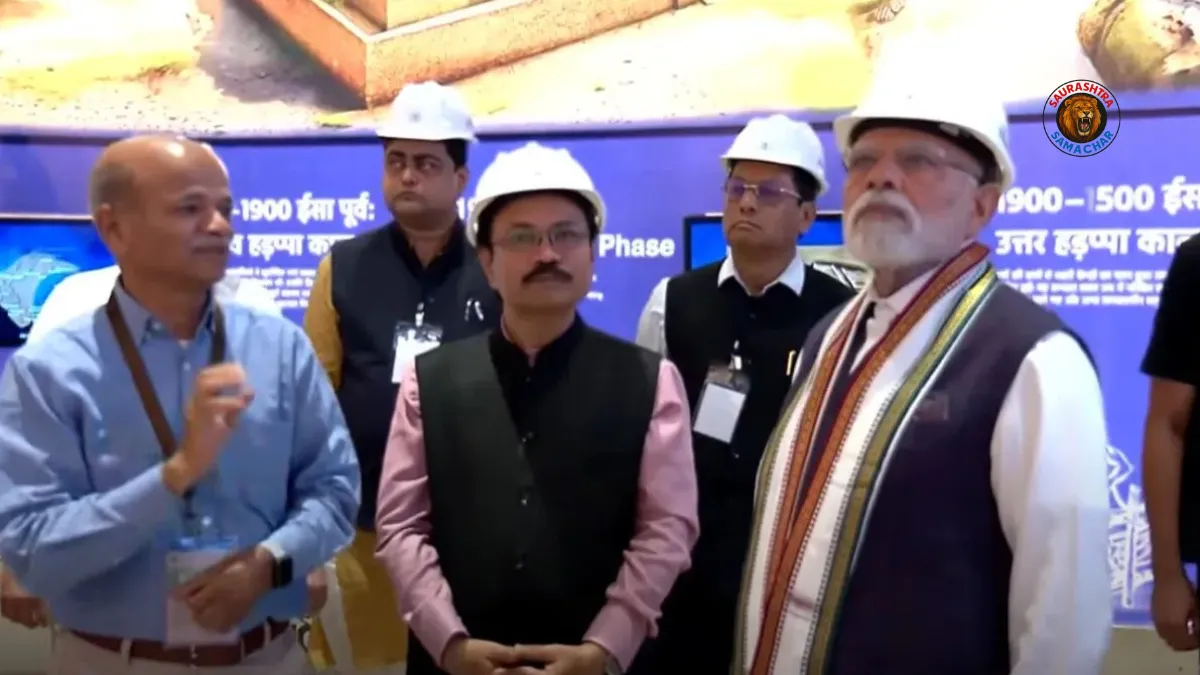
Prime Minister Narendra Modi’s Japan visit has once again underlined the importance of India-Japan relations in shaping the future of Asia and the global order. This was Modi’s eighth official visit to Japan since becoming the Prime Minister of India, besides several trips he made earlier as the Chief Minister of Gujarat. The visit was not just ceremonial – it carried significant strategic weight, as both India and Japan are trying to reinforce their partnership at a time when geopolitical equations in Asia are rapidly shifting.
From defense and security to technology exchange, from infrastructure projects to clean energy, this visit has laid down a new roadmap for bilateral as well as multilateral cooperation. With the United States, Russia, China, and other Asian powers deeply involved in the Indo-Pacific narrative, Modi’s Japan visit has become a symbol of India’s intent to strengthen ties with trusted allies and build a more balanced multipolar world.
A Visit Beyond Diplomacy
Prime Minister Modi was on his East Asia tour between August 29 and September 1, 2025, visiting both Japan and China. Analysts believe that this tour was crucial in sending a message that Asia is rising as a collective power in the 21st century multipolar world.
Earlier in 2025, Modi had already visited the United States, where he met then U.S. President Donald Trump. Later, he participated in the G7 discussions and attended the Kananaski Summit, where he met Japanese Prime Minister Shigeru Ishiba. This was followed by Modi’s participation in the SCO Summit in Tianjin, China. Clearly, the Prime Minister is trying to balance relations with major powers and build new coalitions to strengthen India’s role in global governance.
Observers suggest that after these diplomatic rounds, India may host visits by Russian President Vladimir Putin and even President Trump later this year, reflecting how New Delhi has become a hub of international engagement.
India-Japan Relations: An Enduring Friendship
Japan has always been considered one of India’s most reliable partners. Despite frequent changes in Japanese leadership, relations with India have remained stable and progressive. Modi himself has worked with four Japanese Prime Ministers during his tenure – Shinzo Abe, Yoshihide Suga, Fumio Kishida, and now Shigeru Ishiba.
This continuity shows the deep-rooted trust between the two nations. Shared democratic values, commitment to fair trade, mutual respect for culture, and a focus on technology and investment have been the bedrock of India-Japan ties.
In the Indo-Pacific strategic framework, Japan plays a key role alongside India, the U.S., and Australia through the QUAD alliance. Even though U.S.-India trade tensions have occasionally cast a shadow, India and Japan have reassured the world that QUAD remains strong. Indian Foreign Secretary Vikram Misri clarified that the partnership is resilient and that Tokyo will continue working closely with New Delhi to preserve shared interests.
Modi’s Strategic Vision: Connecting Asia
Narendra Modi has always believed that India’s rise is closely tied to its Asian partners. During his Gujarat days, he often visited Japan and China to seek investment, learn from their technological advances, and establish connections that would later help him as Prime Minister.
This visit highlighted the same philosophy – India and Japan can be described as:
- Japan: The Tech Powerhouse
- India: The Talent Powerhouse
If these two forces combine effectively, they can transform sectors like green energy, digital technology, logistics, mobility, and infrastructure. Modi stressed that this partnership is not just about business, but about shaping the future of Asia.
Japanese Prime Minister Ishiba echoed this sentiment, calling for joint solutions to global challenges. Both leaders signed a joint declaration, celebrating centuries-old ties and reaffirming their commitment to shared values, cultural exchanges, and cooperation on humanitarian grounds.
Key Outcomes of Modi Japan Visit
The outcomes of this visit go beyond symbolism. Several important agreements and strategic commitments were announced:
1. Security and Defense Cooperation
- Both nations agreed to strengthen defense technology collaboration.
- Japan and India will work together on new security tools and technologies.
- Joint military exercises and intelligence-sharing will continue to expand.
2. Economic Roadmap for the Next Decade
- Japan pledged to invest 10 trillion Japanese Yen (around $67 billion) in India over the next 10 years.
- Japanese private companies also committed to investing in AI, next-generation mobility, and clean energy projects.
- Small and Medium Enterprises (SMEs) will be encouraged, creating new jobs in India.
3. Human Resource Exchange
- A special Indo-Japan Human Resource Exchange MoU was signed.
- Skilled Indian youth will be trained in Japan and gain employment opportunities there.
- Japanese expertise will support capacity-building in India’s young workforce.
4. Clean Energy and Minerals Partnership
- Agreements were signed on Clean Hydrogen and Ammonia projects.
- A joint framework for Mineral Resources exploration was also finalized.
5. Digital Partnership 2.0
- The two countries launched Digital Partnership 2.0, focusing on Artificial Intelligence, robotics, cybersecurity, and data-driven innovation.
The Bullet Train Project: A Symbol of Trust
One of the flagship projects under India-Japan cooperation is the Mumbai-Ahmedabad High-Speed Rail (Bullet Train), built with Japanese Shinkansen technology.
Despite facing delays and land acquisition challenges, both governments reaffirmed their commitment to speed up the project. For Japan, it is a matter of technological pride, while for India, it is a leap toward modern infrastructure. This project continues to symbolize the trust and long-term vision shared by both nations.
Geopolitical Impact of the Visit
The Modi Japan visit also sent a strong message to the West and to Asian rivals. The visit underlined three key geopolitical realities:
- India is not a small player – It is a rising power in Asia with influence that extends to the global stage.
- Japan stands firmly with India – despite uncertainty around U.S. policies, Japan has reaffirmed that its partnership with India is future-proof.
- QUAD remains strong – Even with doubts about U.S. participation in upcoming summits, India and Japan have committed to keeping QUAD alive.
Both leaders also discussed Open Indo-Pacific strategies and the Indo-Pacific Oceans Initiative, showing that maritime security and free navigation remain central to their vision.
A Future of Shared Growth
Looking ahead, experts believe the India-Japan partnership will be defined by three pillars:
- Defense and Security – Jointly ensuring stability in the Indo-Pacific.
- Economic Cooperation – Driving investments, trade, and industrial growth.
- Global Collaboration – Addressing climate change, technology innovation, and humanitarian crises together.
For India, Japan is not just an economic partner but also a cultural and strategic ally. For Japan, India represents a trusted democracy with enormous growth potential. Together, they are crafting a new narrative for Asia.
Conclusion: Modi Japan Visit
The Modi Japan Visit was more than a diplomatic event – it was a vision statement. It showed how India and Japan can stand together to balance power in Asia, strengthen democracy, and push forward innovation and sustainable development.
In times when global politics is volatile, India and Japan’s partnership stands as a model of trust, mutual respect, and shared ambition. With long-term investment plans, clean energy projects, defense cooperation, and people-to-people exchanges, the relationship has entered a new era.
For Asia and the world, this visit demonstrated that India is not just participating in the global order – it is shaping it. And in this journey, Japan remains one of its strongest and most dependable allies.